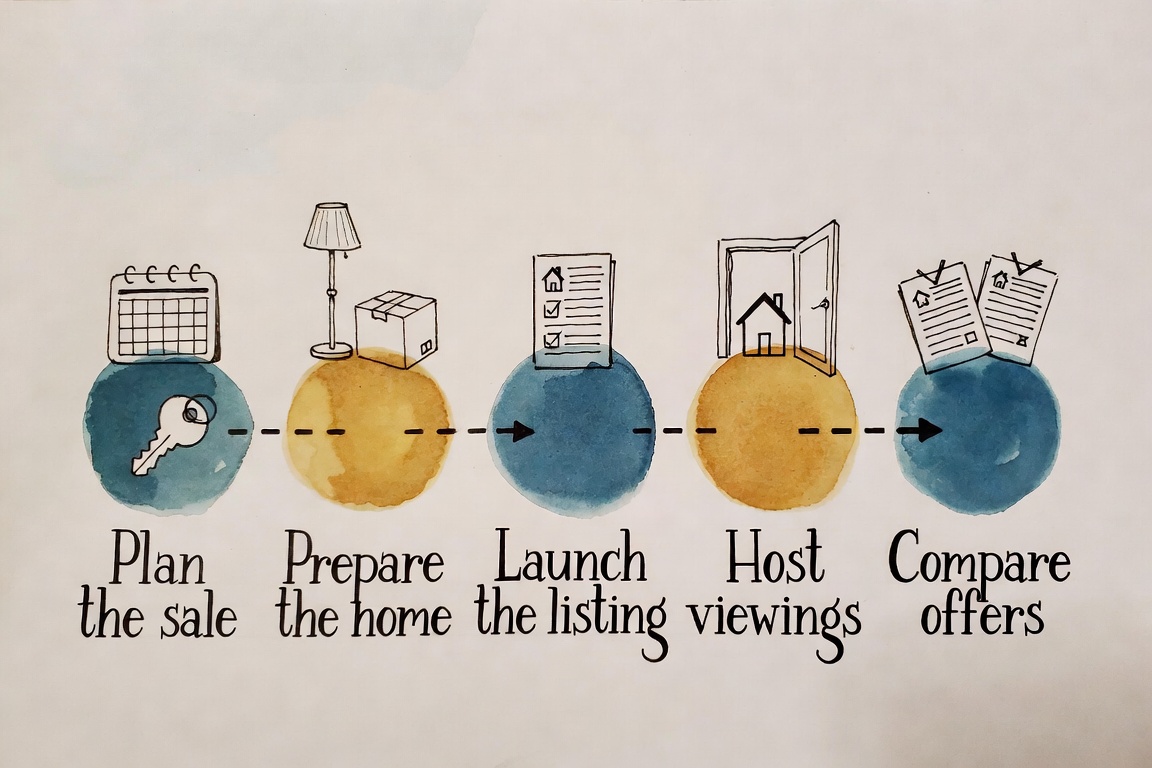
Plan the sale before you list the home
By Melvin Lim · Published 2026-11-06
“Selling a home is more than a transaction. It's a strategic process of maximising value and creating new opportunities.”
Suppose you’ve found a home that works better for your family. It’s closer to school and has room for a desk, but you still need to sell the place you’re living in. An offer comes in above your expectations. The buyer wants the keys sooner than you can move. A second buyer offers less and gives you enough time to move straight into the next home. Which offer would you take?
It’s hard to answer if you’ve spent the whole sale thinking about price. Before you list, work out what you need the sale to make possible. You might need a specific completion date, time to sort out the next purchase, or a minimum amount of money left over after the sale. Rank those needs. If two of them conflict, decide which one you’re willing to bend on. Even a rough ranking gives you something to refer to when an offer comes in and everyone wants an answer.
The seller’s journey in Positioning begins with this planning conversation. The next decision is who the home might suit. Imagine a family that needs a second bedroom it can use for both homework and sleep. If you’ve been using that room for storage, they might walk straight past without realising how well it could work. Clear the room, show where a desk fits, and make sure the listing includes a floor plan. Each choice answers a question that buyer is likely to ask.
The launch and viewing should tell the same story. If the photographs make the dining area a selling point, leave the table in place for viewings and check that a buyer can pull out a chair without blocking the walkway. If there’s a drawback, such as an awkward corner or limited storage, work out what you can show about it. You may be able to demonstrate where a cabinet fits. If space really is tight, the buyer can weigh that trade-off before making an offer.
At negotiation, pull out the priorities you wrote down. Compare the offer price and proposed dates together. Think through the practical cost of any gap between homes. Would you need temporary accommodation, a second move, or somewhere to store furniture? How much would you actually pay, and how disruptive would it be? Ask the buyer whether their proposed date is firm before you start pricing a temporary move. A higher offer may still be the better choice. The comparison shows you what you’d be agreeing to in exchange.
Try this. Before the first viewing, write three lines on a sheet of paper. Put your preferred completion date on the first, the latest date you can work with on the second, and one condition you would trade for a better offer on the third. Share it with anyone who needs to agree to the sale. When the first offer arrives, read it against that list before you respond. You can change your priorities as circumstances change, but you’ll know exactly what you’re changing and why.
Book source · Page 35 quote and page 36, Figure 7.